Generational Shifts in the Rental Market
Understanding Trust, Technology & Diversity Across Five Generations
Growing Renter Demographics & Aging Landlords
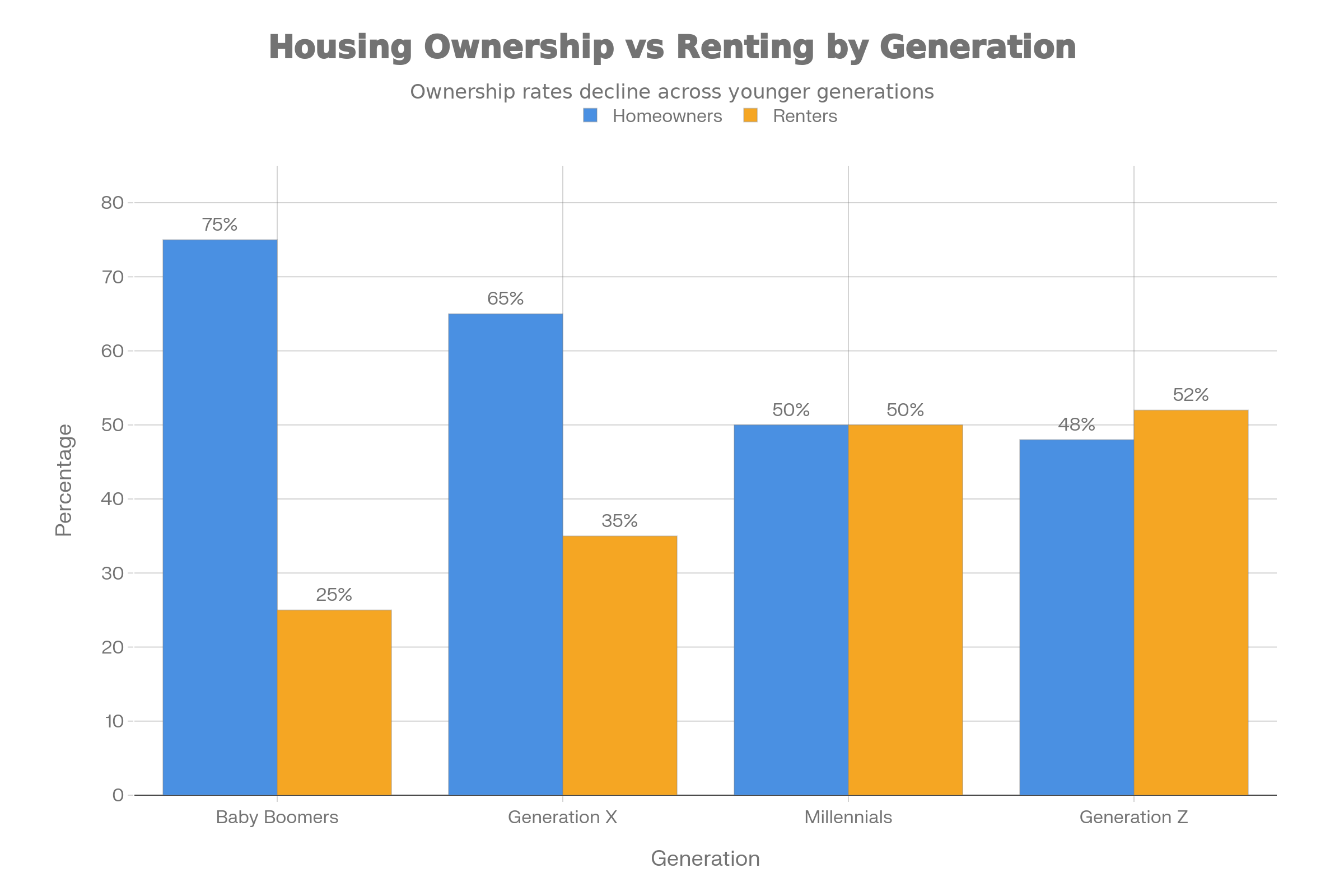
The profile of landlords and renters is shifting dramatically as different generations age. Around 58% of resident real estate investors in BC and Ontario are age 55 or older, primarily Baby Boomers and older Gen X. Meanwhile, younger generations (Millennials and Gen Z) make up the bulk of renters today, with roughly half of Millennials and Gen Z renting their homes.
Why Generations Matter in Renting
Each generation came of age with different technology, economic conditions, and norms around housing. They may all move through the same rental process – from identifying themselves, exchanging data, communicating, assessing fit, to signing a lease – but they don't experience it the same way.
For example, a Baby Boomer landlord who bought property decades ago might have very traditional views on paperwork and trust, while a Gen Z tenant using a smartphone app for their first apartment has entirely different expectations. These differences can lead to misunderstandings if not recognized.
Canadian rental transactions involve "five generations trying to interact using five different models of identity, data, and communication." Understanding these patterns helps landlords, property managers, and policymakers design rental systems that are fair and accessible to all ages.
Rental Property Investors by Age Group
Statistics Canada Study - British Columbia & Ontario

Housing Ownership vs Renting by Generation
Comparative demographics across age groups
Baby Boomers
How Baby Boomers Experience the Rental Process
🆔 Verification & Identity
Boomers are most comfortable with in-person identity checks and paperwork. They typically prefer to show a physical ID and sign documents with ink on paper. As landlords, they often like to see tenant documents in person. They can be cautious about fully digital ID verification systems, feeling more secure with face-to-face confirmation of identity.
📄 Data & Records
This group trusts official records and paper trails. They put faith in documents like bank statements, employer letters, and government-issued papers. While they do use online listings, many still appreciate printed copies and a clear verbal explanation of rental terms.
💬 Communication
Boomers rely on phone calls and emails as their main channels, with text messages used only for quick notes. They are less likely to be comfortable using app-based messaging as the primary form of communication. A Boomer landlord may expect a phone call to discuss important matters.
⚖️ Assessing Fit
As landlords, Boomers value stable income, strong references, and good credit histories, often personally calling previous landlords or employers to verify a tenant's reliability. As tenants, they expect their long track record of reliability to be recognized and to speak for itself.
📋 Lease Preferences
Boomers like things clear and formal. They appreciate detailed, written lease agreements (often preferring a paper copy) and clear rules spelled out. Many still favor pen-and-paper signing. However, this generation is slowly becoming open to digital conveniences when the process is simple and well-explained.
Summary
Baby Boomers approach renting with a traditional, risk-averse style – they trust personal interaction and paper documentation – but with guidance, they can adapt to modern tools. They are the generation most likely to need support in navigating fully digital systems.
Generation X
How Generation X Experiences the Rental Process
🆔 Verification & Identity
Gen Xers are generally comfortable with digital processes up to a point. They don't mind scanning IDs and using secure online portals for rental applications. However, they still often want at least one real conversation (phone or face-to-face) before making major decisions. This reflects their straddling of eras – they use digital tools but still value personal interaction to build trust.
📊 Data & Research
This generation tends to be information-hungry and comparative. They will look at multiple sources of data – combining official documents with online reviews and advice from friends. Gen X wants a concise summary of key facts, but for high-stakes decisions, they will dive into the fine print and read all the details.
💬 Communication
For Gen X, email and text messaging come naturally, and they expect timely responses on these channels. They use both phone and digital communication fluidly. What stands out is that Gen X renters and landlords get frustrated if their messages are ignored or if communication is inconsistent – lack of response is a red flag.
⚖️ Assessing Fit
As landlords, Gen X blends old and new techniques: they'll run credit checks and use online screening tools, but they also apply personal judgment and intuition. They know their credit might not be perfect, so they tend to explain any issues to build trust – proactively telling a potential landlord why a credit report hiccup doesn't reflect their true reliability.
📋 Lease Preferences
Many Gen X renters and landlords seek stability. It's common for them to prefer one- or two-year leases for predictability. They have families or long-term plans and value knowing they won't have to move in a few months. They insist on clear lease terms – detailing how and when rent can increase, who is responsible for repairs, and who pays utilities.
Summary
Gen X truly bridges the gap: they embrace digital conveniences but still anchor their decisions in personal communication and thorough information. They want a mix of modern efficiency and old-fashioned transparency. They are often the "bridge generation" in rental transactions.
Millennials
How Millennials Experience the Rental Process
🆔 Verification & Identity
Millennials generally expect rental processes to be digital. Online applications, electronic identity verification, and e-signatures on leases are considered normal to them. Uploading scans or photos of ID through a secure platform is second nature. A purely paper-based process might seem outdated or inconvenient.
🔍 Data & Research
When searching for housing, Millennials heavily rely on online information. They scour rental listing websites, photos, virtual 3D tours, and crowd-sourced rating sites for reviews of buildings or landlords. They also comparison-shop thoroughly: checking neighborhood data, transit times, school ratings, and rent prices. They trust what's transparent and data-driven.
💬 Communication
Millennials strongly prefer text messaging or in-app messaging over phone calls. They are the generation of WhatsApp and instant messaging. Responsiveness is critical: long delays in replies damage trust quickly. Millennials also like to have written records of communications; after a verbal conversation, they appreciate a quick recap in writing to avoid misunderstandings.
⚖️ Assessing Fit
Millennials often worry about the criteria landlords use to judge them, because many have high debt (e.g., student loans) or just starting credit histories. They fear being rejected due to credit scores or debt-to-income issues, so they really appreciate when the process is transparent and fair. Clear upfront criteria for approval, and explanations if turned down, go a long way with this generation.
📋 Lease Preferences
Having come of age during economic turbulence, many Millennials value flexibility. They often prefer shorter lease terms or options to sublet/transfer, knowing that jobs and life situations can change quickly. They have fully embraced digital convenience in transactions and expect to sign leases electronically and pay rent online.
Summary
Millennials are tech-native renters navigating a challenging market. They respond well to efficient, transparent, and flexible rental processes. They tend to lose trust in systems that are unresponsive or seem opaque. This is the largest renter demographic and understanding their needs is critical for the rental industry.
Generation Z
How Generation Z Experiences the Rental Process
🆔 Verification & Identity
Gen Z renters assume that proving identity will be quick and tech-driven. They expect fast ID verification via smartphone camera or apps. Many in this cohort hardly ever carry physical ID documents; they rely on digital wallets or cloud-stored IDs. They find it cumbersome if asked to provide notarized copies or present papers in person.
📱 Data & Research
When looking for rentals, Gen Z wants real-time data and authenticity. They look for up-to-the-minute info on rent prices, vacancy rates, and neighborhood trends (often via apps or social media). Importantly, this generation trusts peer reviews and social proof. They might give more weight to screenshots of tenant reviews, TikTok videos touring an apartment, or Instagram posts about a neighborhood than to a printed brochure.
💬 Communication
Gen Z overwhelmingly prefers chat-based communication – texting, direct messages (DMs), or app notifications. Many feel anxious about lengthy phone calls or meeting unfamiliar people in person. A landlord who only wants to communicate by phone might alienate them. Gen Z also needs clear guidance on communication norms and appreciates when expectations are set upfront.
⚖️ Assessing Fit
As the newest in the workforce, Gen Z tenants often have little or no credit history and minimal savings. They fear being automatically filtered out by rigid screening systems. It's common for Gen Z renters to need co-signers or guarantors (like a parent co-signing the lease). Policies that treat a "thin file" (no credit history) the same as "bad credit" feel unfair to them. Landlords who offer ways to work with first-time renters will find Gen Z much more motivated.
📋 Lease Preferences
Gen Z highly values flexibility and convenience. They often favor short-term rentals, month-to-month leases, or co-living arrangements over traditional one-year leases. Additionally, Gen Z expects all the administrative parts of renting to be fully digital and mobile-accessible. If a property doesn't support online payments or requires paper forms, it will feel out-of-step.
Summary
Gen Z brings a tech-centric, flexibility-first approach to renting – they embrace platforms and digital solutions wholeheartedly, and they hope the rental market will meet them there. They represent the future of renting and their needs should shape the evolution of rental platforms and processes.
The IDEAL Framework
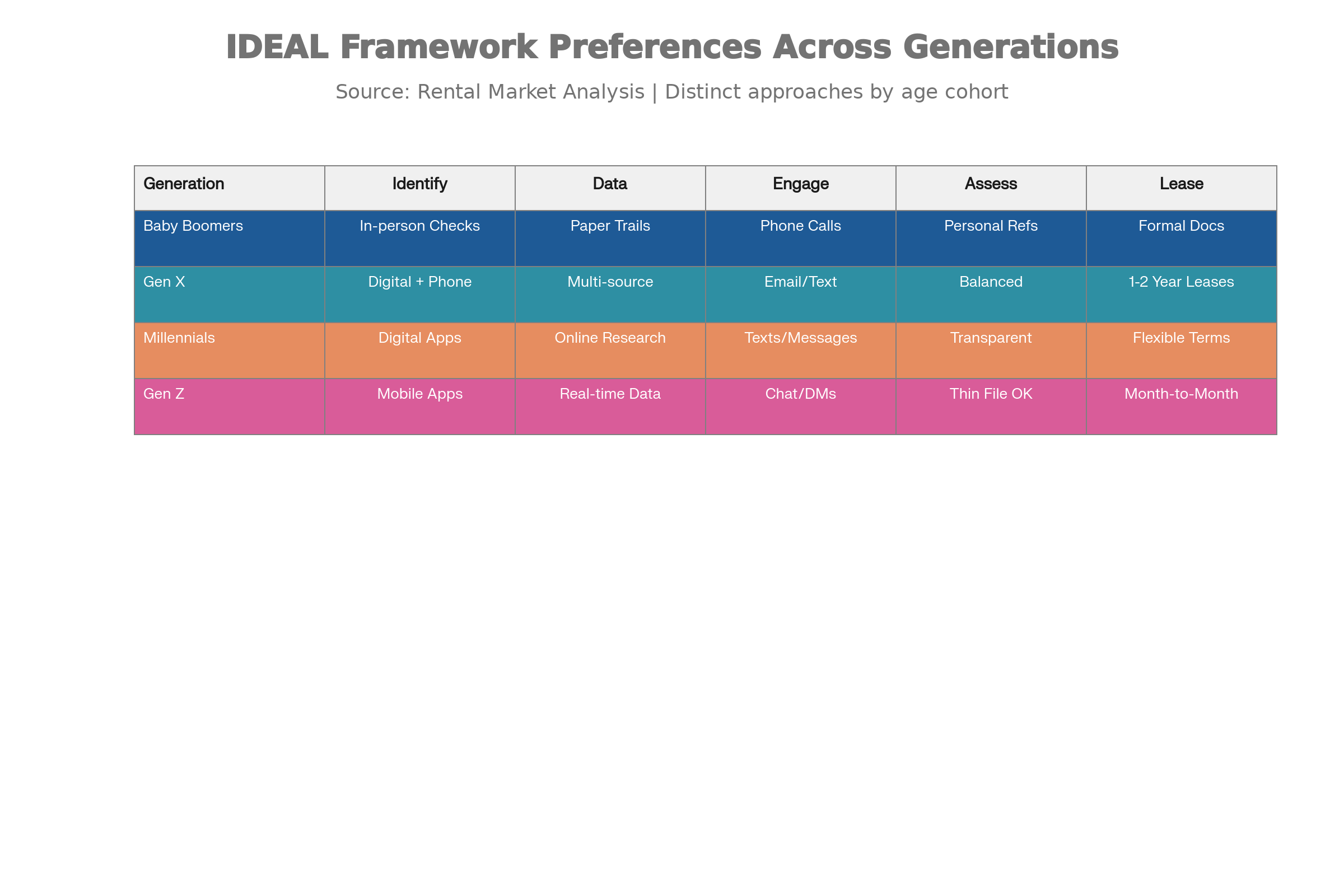
The IDEAL Framework provides a structured approach to understanding the five critical pillars of the rental process. Here's how each generation approaches these pillars:
| Pillar | Baby Boomers | Generation X | Millennials | Generation Z |
|---|---|---|---|---|
| Identify | In-person checks, Physical ID, Formal verification | Digital + Phone, Balanced approach, One conversation | Online applications, E-signatures, Digital-first | Mobile apps, Smartphone verification, Cloud-stored ID |
| Data | Paper trails, Official documents, Printed records | Multi-source, Credit reports + online reviews, Due diligence | Online research, Listing sites, 3D tours, Data-driven | Real-time data, User-generated content, Social proof |
| Engage | Phone calls, Emails, Personal touch, Face-to-face | Email & text, Timely responses, Clear communication | Text messaging, In-app chat, Written records, Instant replies | Chat-based, DMs, Notifications, Clear norms |
| Assess | Personal calls, References, Credit & income history | Blended techniques, Credit checks + judgment, Explanation | Transparent criteria, Fair assessment, Upfront info | Flexible screening, Thin file consideration, Guarantors allowed |
| Lease | Formal agreements, Paper signing, Pen-and-paper, Digital-hesitant | 1-2 year leases, Clear terms, Detailed specifications | Shorter terms, Flexibility, E-signing, Online payments | Month-to-month, Maximum flexibility, Fully digital, Mobile-first |
Key Insight
One system can serve all generations if it offers flexibility in approach. Rather than creating separate rental processes for each age group, the goal is to have one robust system that can adapt its approach – for instance, offering both digital and paper options – so that everyone is comfortable while the rules stay consistent.
IDEAL Framework Preferences Across Generations
Visual comparison of how each generation approaches rental process pillars
Cross-Generational Insights & Common Ground
Despite their differences, all renters and landlords, young or old, ultimately want to feel respected, informed, and treated fairly. Every generation cares about being able to prove their identity, get reliable information, communicate, and manage risks – they just go about it in different ways.
Universal Principles
- Clarity: Everyone benefits when rental processes are clear, consistent, and transparent across the board.
- Fair Expectations: Setting out expectations and criteria upfront so tenants of any age know how they will be evaluated.
- Consistent Rules: Maintaining the same fair rules for all, even if you provide different methods of reaching those rules.
- Flexibility in Method: Offering both phone and digital communication options, providing both electronic and printed documentation.
- Smart Screening: Distinguishing between no credit history and bad credit in screening processes.
- Plain Language: Using plain language in contracts while still offering high-tech conveniences.
- Respect: Recognizing that each generation brings valuable experience and unique perspectives to the rental market.
Industry Takeaway
One does not need separate rental systems for each generation. Rather, one robust system can serve all ages if it offers flexibility in approach.
The IDEAL Framework (Identify, Data, Engage, Assess, Lease) should be one "clear system that can be explained differently to each generation – with extra support where needed – while keeping the rules the same."
In practice, this means:
- Offering both phone and digital communication options
- Providing both electronic and printed documentation
- Distinguishing between no credit history and bad credit in screening
- Using plain language while offering high-tech conveniences
- Supporting both paper and digital signatures
- Enabling both traditional and mobile-first payment methods
- Recognizing diverse communication preferences
Looking Forward
Understanding generational behaviors and motivations enables a smoother rental experience for all parties – from an 80-year-old retiree landlord who prefers a phone call, to a 22-year-old tenant who'd rather get a text.
This generational lens helps predict trends (like more renters in younger cohorts) and also guides landlords and property managers in bridging generational gaps. By auditing how each generation experiences the rental market through the IDEAL Framework, the industry can design systems that work for everyone.
The future of renting depends on building inclusive systems that respect how different generations prefer to verify identity, exchange data, communicate, assess fit, and formalize agreements. When we understand these differences, we enable fair, accessible housing experiences for all ages.